 Global
Together with People and Society
INDEX
We strive to provide value to our customers, employees, business partners, local communities, shareholders, investors, and other stakeholders by working diligently to “continue to deliver safe and delicious food to our customers.” We are also expanding measures related to DE&I and human resource development to improve job satisfaction and comfort of our employees.
Enhance the Value of the Customer and Employee Experience
Materiality
Increase customer and employee experience value using DX and other means
By making everyday meals more enjoyable, we aim to enrich not only our customers’ dining experiences but also their lives. Guided by this belief, we focus not only on product quality but also on enhancing the customer experience value—continually asking how we can deliver greater satisfaction and delight. These initiatives extend beyond Japan and are being implemented globally through our overseas expansion.
Improving the value of the customer experience
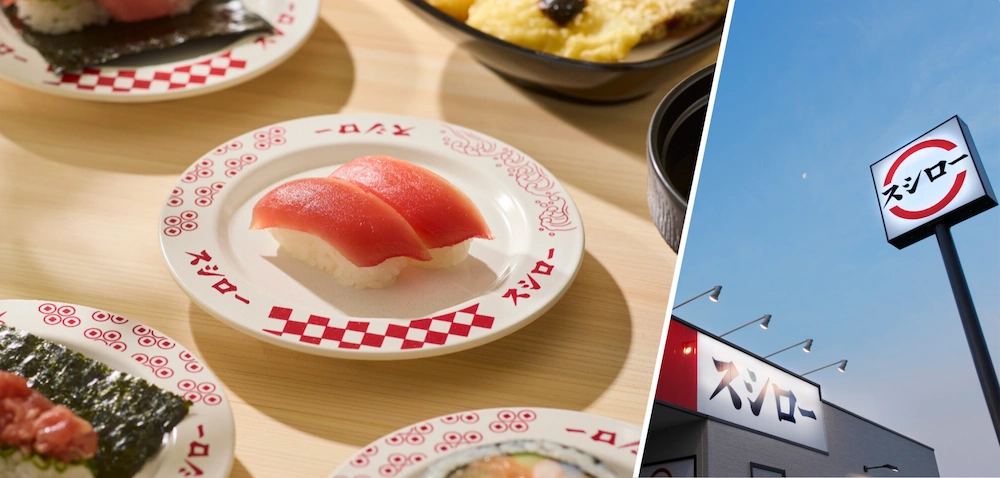
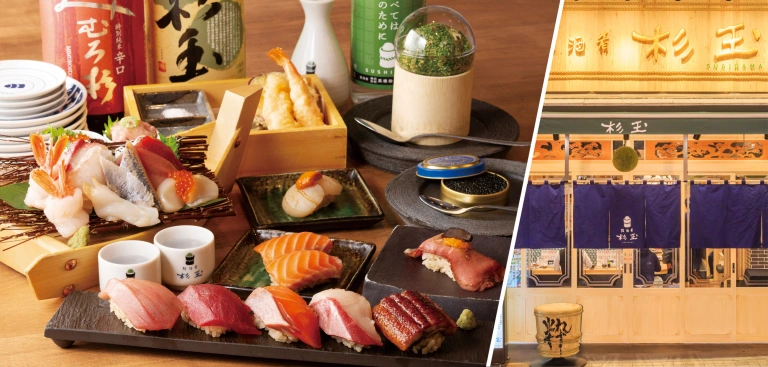
The Group operates “Sushiro” and “Sugidama,” bringing the total store count to 1,107 (as of September 1, 2026). The common thread that runs through all of our stores is not only the delicious taste of our products, but also our desire to provide customers with a rich lifestyle and time through food. By leveraging the unique strengths of each brand, we strive to enhance customer experience value.
Under the theme of “Straight to Sushi,” Sushiro is striving to improve its services to satisfy its customers by communicating its commitment to taste and quality to its customers and at the same time, reminding its employees and staff of this commitment. We are also rolling out the Digital Sushiro Vision (commonly known as “Digiro”), providing customers with a new and engaging conveyor-belt sushi experience.
Kyotaru is strengthening its product lineup to suit different usage scenarios. We have developed high quality frozen sushi and other products that are sold through major supermarket e-commerce sites so that customers can enjoy freshly prepared sushi at any time of the day.
In September 2024, Kaiten-sushi Misaki opened its flagship store in Ningyocho, Tokyo. As a model store where a high standard of service is practiced, it is also used as a training and education center for staff, with the aim of improving service at each store.
Sugidama uses the same ingredients as Sushiro, but offers creative menu items that are attractive and unique to a sushi-izakaya restaurant. We place importance not only on the quality, but also on making the dining experience enjoyable and interesting for our customers.
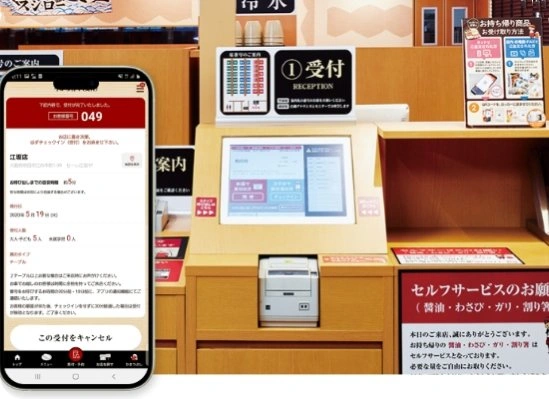
Enhancing seamless reservations and payments through DX
Sushiro stores have adopted various digital technologies, including app-based reservations, automated entry guidance and ticketing systems, self-service touchscreens for ordering, self-checkout registers, and automated lockers for takeout orders. By leveraging digital transformation (DX), we not only improve operational efficiency but also enhance customer experience value by reducing wait times, streamlining the ordering process, and ensuring smooth product delivery.
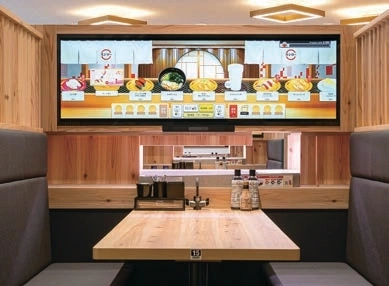
Digital vision reproduction of a kaiten-sushi lane
Launched in September 2023, Digiro has been introduced in 123 domestic stores and 19 overseas stores as of the end of September 2025. Digiro is a system in which sushi flows in a kaiten-sushi lane on a large touchscreen, recreating the fun of encountering new sushi and being able to choose from a variety of choices. In addition to ordering functions, the system offers content such as information highlighting our commitment to sushi quality and interactive quizzes, thereby enhancing the customer experience value and generating positive feedback from customers.
Improving the value of the employee experience
At Sushiro, the introduction of automated kitchen lanes has improved operational efficiency while enhancing service quality and creating a more comfortable working environment. In addition, in November 2023, we revised the dress code for store staff, allowing them to freely choose their hair color and hairstyle. By allowing employees to work with more individuality and vitality, we will enhance the value of the experience for our customers.
Opened SUSHIRO To The Future: Expo Edition at Expo 2025 Osaka, Kansai, Japan
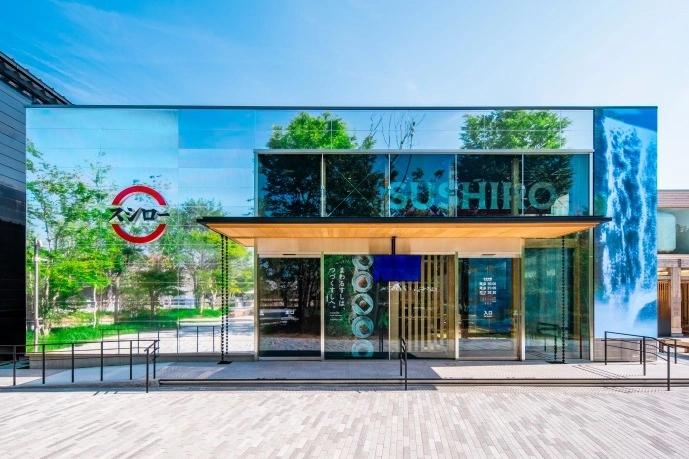
Under the concept “From Conveyor Belt Sushi to Sustainable Sushi: The Future of a Fish Restaurant in 2050,” we opened SUSHIRO To The Future: Expo Edition at Expo 2025 Osaka, Kansai, Japan. Positioned as a venue where customers can enjoyably learn—through both the menu and the in-store experience—about sustainability challenges facing marine resources and the technologies addressing them, the restaurant took on the new challenge of serving only farmed fish. Sushi made with ingredients cultivated using advanced technologies, such as land-based aquaculture and full life-cycle aquaculture, was offered under the “Fish of Tomorrow” series. In addition, the large touch-screen display, Digiro, featured Expo-exclusive content, including an interactive Sea Urchin Catch Game, which enables customers to learn about marine conservation by virtually harvesting overpopulated sea urchins, providing an engaging and educational experience.
Commitment to Safety, Quality and Reliability
Materiality
Food safety and security
Food safety and security
To provide customers with enriching dining experiences, ensuring product safety and enabling them to dine with confidence are essential. Accordingly, food safety and security are positioned as key priorities.
Quality assurance system based on the HACCP concept
The basic concept of the Hazard Analysis and Critical Control Point (HACCP) is to analyze where and what risks exist from procurement of raw materials to delivery of products to customers, plan how to control and avoid risks at what stage, continuously check and visualize the implementation status, conduct improvement activities when problems are detected, and revise the plan as necessary. We will manage our entire supply chain based on this basic concept of the HACCP.
◎Overview of the supply chain

Quality and hygiene management of suppliers
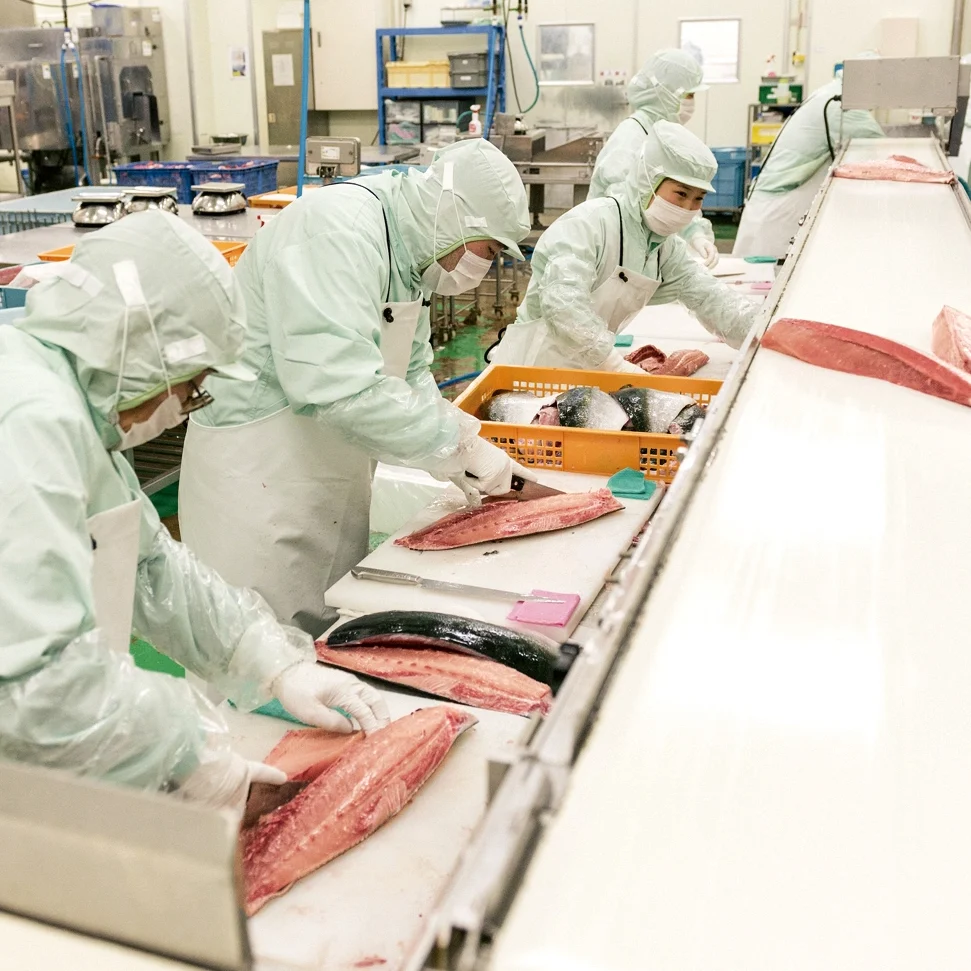
As of September 30, 2025, the F&LC Group partners with approximately 130 suppliers from whom we purchase commercial materials. When entering into new business relationships, food safety is treated as a particularly critical factor. We confirm that suppliers’ processing facilities have obtained GFSI-recognized certification for food safety management. If a supplier’s processing facility has not yet obtained the certification, the company’s dedicated department conducts on-site visits to check the management status in accordance with the Group’s requirements and confirms that it meets the criteria for acceptance before commencing business with the supplier. Even after transactions have begun, inspections and site visits are conducted on an irregular basis to ensure safety and security.
Quality and hygiene management in stores
In addition to complying with the food safety laws and regulations of the countries and regions in which we operate, our restaurants conduct hygiene management based on the HACCP concept, an internationally recognized hygiene management method. The Group’s core menu is sushi, and because we handle a lot of raw food, hygiene management for employees engaged in food preparation is particularly important. At our core business, Sushiro, we have implemented a “third-party hand-washing verification” system to ensure that all employees follow the correct procedure for washing their hands when entering the store, after using the restroom, and at other important times. The company has formulated a HACCP hygiene management plan to visualize the items to be addressed in hygiene management including washing hands and we ensure that all employees are informed through educational activities. Twice a year, an external hygiene inspection agency conducts a hygiene inspection of all stores to evaluate whether they are managed in accordance with the hygiene management plan. If a store receives a low evaluation, a specialized department of the company visits the store to provide guidance for improvement, thereby ensuring that all stores maintain a certain level of safety.
Allergen and origin information
In order to accommodate a variety of customers, we provide allergen information for our main menu and promotional items, updating it as needed.We also disclose the origin of ingredients in each product in accordance with the “Guidelines for Country of Origin Labeling in Restaurants” published by the Ministry of Agriculture, Forestry and Fisheries.
*Other allergens not originally included in the menu may be unintentionally attached or mixed in during factory production or cooking in the store.
*Desserts, drinks, and toppings (sauces, seasonings, etc.) are not subject to labeling.
*Due to weather conditions or procurement issues, we may source from other countries.
Membership in food safety and quality organizations
We participate in the Safety and Security Committee of the Japan Foodservice Association and actively engages in information-sharing and dialogue sessions. In addition, Kyotaru, a Group company, has obtained certification under the JFS-B Standard, a food safety standard operated by the Japan Food Safety Management Association (JFSM).
Responsible Advertising and Marketing
Materiality
Increase customer and employee experience value using DX and other means
Basic approach
The F&LC Group conducts its advertising and marketing activities in accordance with its Code of Conduct, which sets out principles such as ensuring the safety, security, and quality of products and services, as well as implementing responsible marketing communications in compliance with applicable laws and regulations. In addition, we have adopted internal guidelines on product claims and representations to ensure the accuracy and appropriateness of content. The Code of Conduct is available on our official website
Management framework
Proposals and the development of campaigns and advertising materials are reviewed at a cross-functional “Trinity” meeting comprising representatives from the marketing and product divisions, the heads of each operating company, and legal personnel. This framework ensures thorough discussion and deliberation of claims and representations from a compliance perspective. In addition, the direction and content of campaigns and advertising materials are reported to the management meeting of each operating company and resolved by the Board of Directors. All advertising materials are reviewed by several related departments, including the Legal Department and Customer Support Department (customer relations department).
Education and awareness
The Advertising and Promotion Department, in coordination with the Legal Department, conducts compliance training on advertising and marketing practices twice a year, drawing on internal near-miss cases that revealed potential compliance risks. In FY2025, one such training session was conducted. In addition, the department participates in study sessions on the Act against Unjustifiable Premiums and Misleading Representations, organized by the Federation of Fair Trade Conferences and supported by the Consumer Affairs Agency. It also uses its internal portal site to enable team members to engage in self-directed learning and, as necessary, review advertising materials. Through these initiatives, we work to prevent violations in campaigns and advertising materials.
Human Rights and Labor Initiatives Throughout the Supply Chain
Materiality
Enhancement human capital management
Human Rights Policy and Basic Procurement Policy
One of the most important issues for the F&LC Group is not only the sustainability of marine resources and agricultural products, but also issues related to “people.” Based on our responsibility to respect human rights in our business activities, we established and revised our Human Rights Policy in 2024. This policy is based on the UN Guiding Principles on Business and Human Rights, with reference to the 10 principles of the UN Global Compact. Going forward, we will further promote initiatives for the active participation of human resources and diversity, equity, and inclusion (DE&I), while at the same time working to respect the human rights of a wide range of stakeholders (employees, customers, local communities, suppliers, and business partners). We have also established a section on “Respect for Human Rights and Labor” in our Basic Procurement Policy, which we require not only ourselves but also our suppliers to comply with.
In addition, English translations of our Human Rights Policy and Basic Procurement Policy are available on our website to inform as many employees and suppliers as possible.
Human rights due diligence
To fulfill our responsibility to respect human rights, we have established a human rights due diligence (HRDD) mechanism based on the UN Guiding Principles on Business and Human Rights and strive to prevent human rights violations. We are committed to addressing human rights issues related to our business activities by focusing on six key areas: child labor, forced labor, prohibition of discrimination and respect for diversity, freedom of association and respect for the right to collective bargaining, working hours and wages, and occupational health and safety. To identify and assess human rights risks within our supply chain, we distributed questionnaires to approximately 470 major Tier 1 suppliers in FY2025 and received responses from around 80%. Where elevated risks were identified through the survey, the relevant departments determined appropriate actions based on the nature of the business relationship. In addition, as a pilot project under our HRDD efforts, we conducted on-site audits of Tier 2 suppliers in Indonesia. These audits were carried out by an external specialist audit firm, accompanied by Tier 1 suppliers, and included interviews with approximately 60 individuals ranging from management to operational staff, as well as reviews of relevant documents and records. Building on the insights and findings from this pilot project, we will consider further advancing HRDD across the Group.
Initiatives related to human rights and labor
The Group has established a code of conduct with the aim of becoming a company that is widely trusted by all stakeholders. To ensure the thoroughness of this code, we conduct compliance training including human rights and labor issues for all employees. To ensure that employees comply with proper working hours, we monitor overtime hours every month with the aim of preventing employees from working excessively long hours. In some locations, such as the head office, a facial recognition system has been implemented to improve the accuracy of monitoring. In addition, we verify the age of employees with ID cards and other identification at the time of hiring to prevent child labor. We have also established a confidential internal whistleblowing system to receive reports on human rights and labor issues, including workplace harassment.
Promoting DE&I
Materiality
Enhancement human capital management
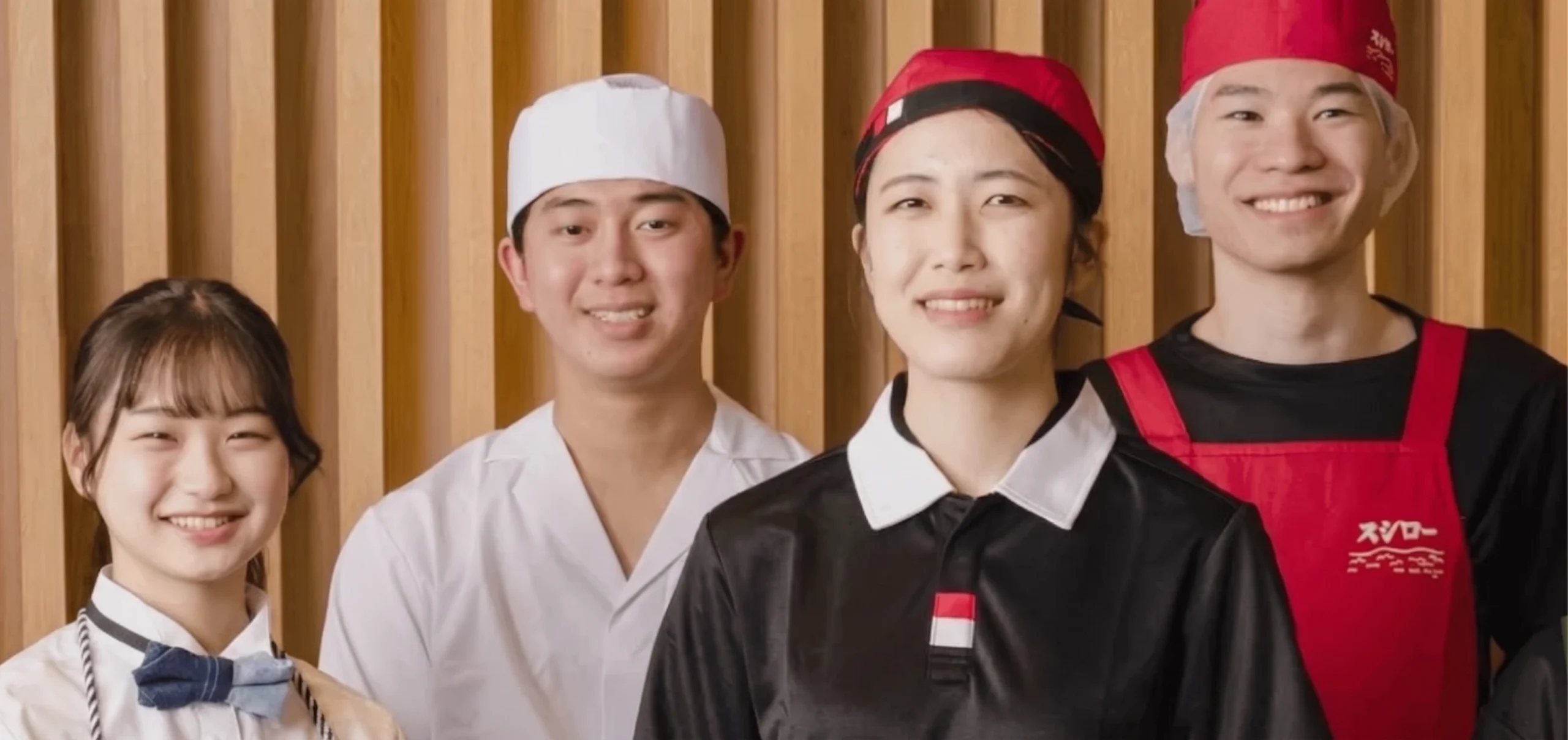
FOOD & LIFE COMPANIES aims to realize its corporate philosophy, VISION: “Change the way people feel delicious every day. Spread joy to the world.” One of the driving forces behind this is the promotion of Diversity, Equity & Inclusion (DE&I). We promote DE&I by setting “Diversity is based on individuality. To infinitely increase the Group’s strength, let’s respect each other’s individuality and demonstrate our diverse talents.” as one of our PRINCIPLES (code of conduct).
Contribution to Society and Community
Materiality
Increase customer and employee experience value using DX and other means
To realize its Vision—“Discovering new tastiness, Sharing moments of joy”—the F&LC Group has identified “Increase customer and employee experience value using DX and other means” as one of its material issues. Under this framework, we implement social contribution initiatives aimed at giving back to communities where we operate and promoting food education and the joy of eating. Specifically, we focus on next-generation education—such as Education for Sustainable Development (ESD) programs and rice cultivation experiences for students—along with child-rearing support and sports programs for persons with disabilities, thereby contributing to the realization of an inclusive society.