
 Global
Together with the Global Environment
INDEX
Our business depends on marine products and other natural resources, and we recognize environmental stewardship as a core responsibility. Under our Environmental Policy, we will further strengthen initiatives to address material issues, including securing sustainable marine and agricultural resources, reducing food loss, and responding to climate change.
Pursuing Sustainability for Marine and Agricultural Products Across the Supply Chain
Materiality
Achieve sustainable procurement using fair business practices
Minimize food loss and waste and effectively utilize marine resources
As a business that relies on a large volume of food ingredients, securing a stable supply of limited marine resources is a strategic priority for the Group. We are strengthening a range of initiatives, including establishing a competitive advantage in procurement—encompassing aquaculture—and thoroughly reducing food loss across the resources we procure. Leveraging our strong customer base, we collaborate with external partners to promote the stable and sustainable use of marine and agricultural resources across the entire supply chain.
Environmental policy
Climate change, environmental pollution, resource and water depletion, and biodiversity loss are global challenges and material issues for the Group. To address these challenges, we established our Environmental Policy in October 2024 and revised it in November 2025. We will seek the understanding and support of not only our employees but also our business partners in implementing this policy.
Towards sustainable procurement
To achieve both a sustainable society and growth, cooperation from our suppliers and business partners who provide us with ingredients is essential. For this reason, we require compliance with our Procurement Policy not only within our company, but also with all suppliers with whom we do business directly and with new suppliers. Together with our suppliers and business partners, we aim to achieve coexistence and mutual prosperity between our corporate activities and the environment and society.
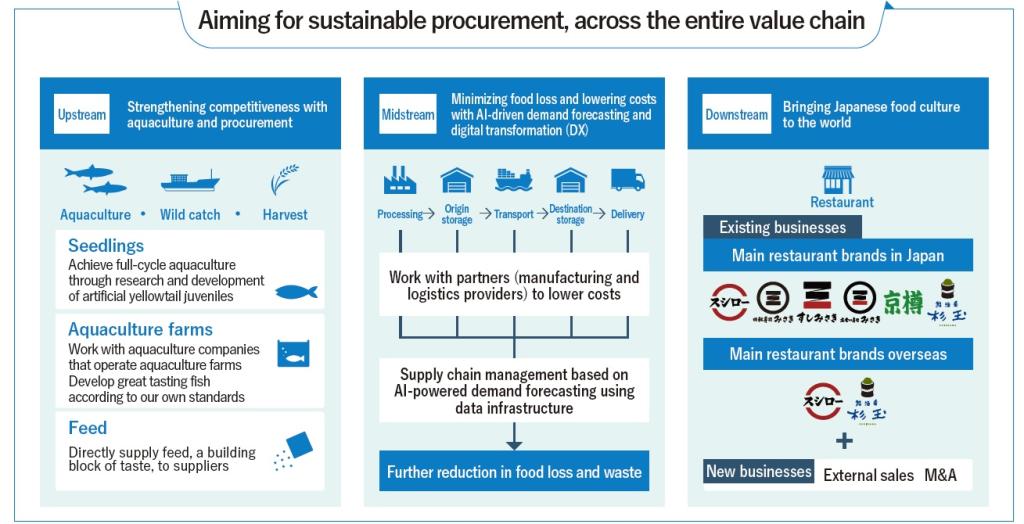
*All shares of KYOTARU CO., LTD. were transferred to SRS HOLDINGS CO.,LTD. on September 1, 2026.
Basic procurement policy and supplier code of conduct
In procuring raw materials and other materials, we have established a basic procurement policy to provide safe and secure products continuously, as well as to ensure compliance with laws, regulations, and social norms. Together with our business partners, we are advancing initiatives to realize sustainable procurement.
Based on the Basic Procurement Policy, we have also established our Supplier Code of Conduct, which sets out the standards that we ask all suppliers and business partners involved in our operations to uphold together with the Group. Our suppliers and business partners are asked to understand the objective of this code and to cooperate in the establishment of a sustainable society.
Beginning to formulate F&LC’s product procurement standards for long-term stable procurement
In addition to the Basic Procurement Policy, we have also begun to formulate our own product procurement standards to ensure stable procurement over the long term. We strive to procure products with consideration for human rights, the environment, biodiversity, and the maintenance of ecosystems, on the premise that they maintain good taste and are safe and secure.
Sustainability and CSR questionnaire
To assess risks across our supply chain—including environmental, human rights, and labor-related risks—we distributed Sustainability and CSR questionnaires to approximately 470 major Tier 1 suppliers in FY2025 and received responses from around 80% of them. Where elevated risks were identified through the survey, the relevant departments determined appropriate actions based on the nature of the business relationship. The survey targets not only marine resource suppliers but also business partners involved in packaging materials, store development, and advertising and promotion. Through this initiative, we identify potential risks across the entire supply chain and implement necessary countermeasures.
TOPICS
First Sustainable Meeting held
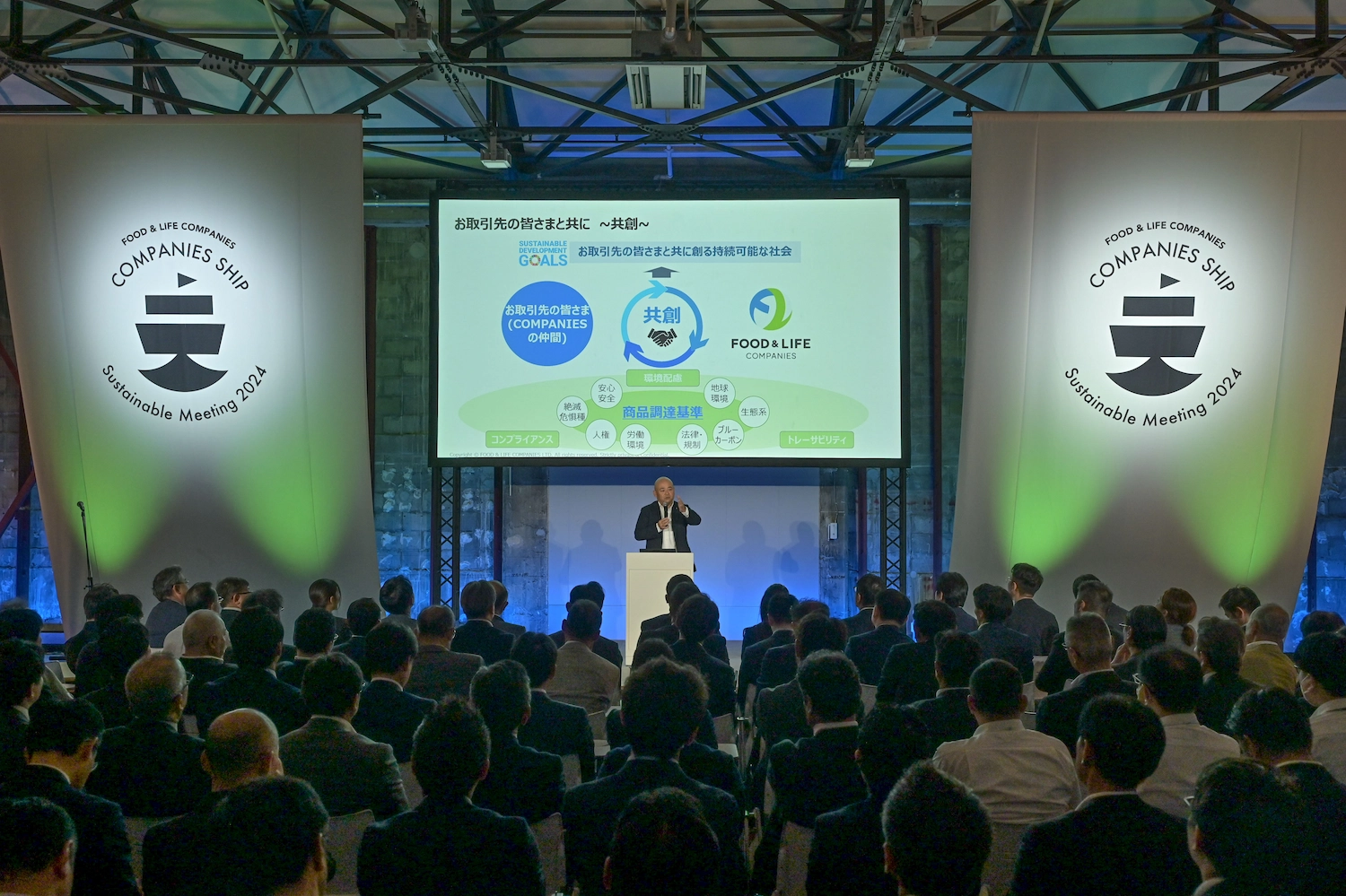
In May 2024, we held our first Sustainability Meeting with 75 major suppliers and business partners. The meeting was organized to promote understanding of our Basic Procurement Policy and initiatives to advance sustainable procurement.It provided a valuable platform for open dialogue and collaboration with our partners, reinforcing our shared commitment to realizing sustainable procurement through co-creation. We are currently planning and preparing for the second meeting.
Sustainable Sourcing of Marine Resources and Development
Materiality
Achieve sustainable procurement using fair business practices
Minimize food loss and waste and effectively utilize marine resources
Building an upstream procurement foundation for marine conservation and stable supply
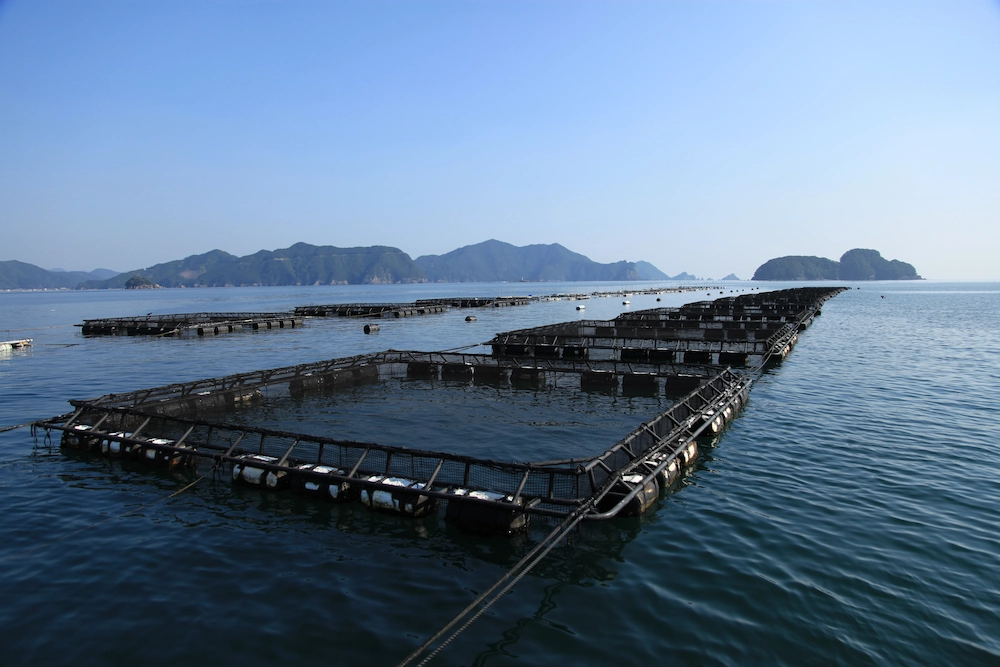
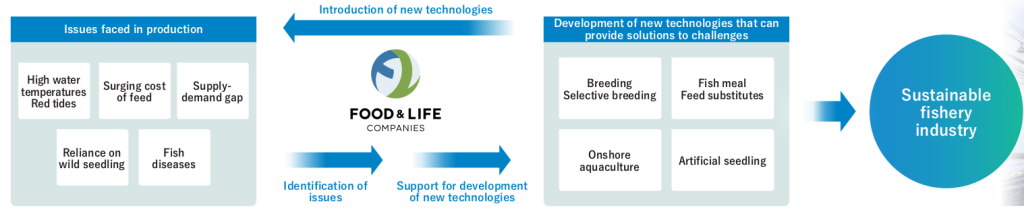
As climate change alters marine environments and raises concerns over declining wild fish catches, the importance of securing marine resources that do not rely solely on wild capture is increasing. As a countermeasure, we are investing in outside businesses and cutting-edge technologies, developing new technologies such as development of seeds and improvement and substitution of feed through business alliances.By strengthening our procurement foundation in upstream operations, we aim to ensure stable quality and production volume.
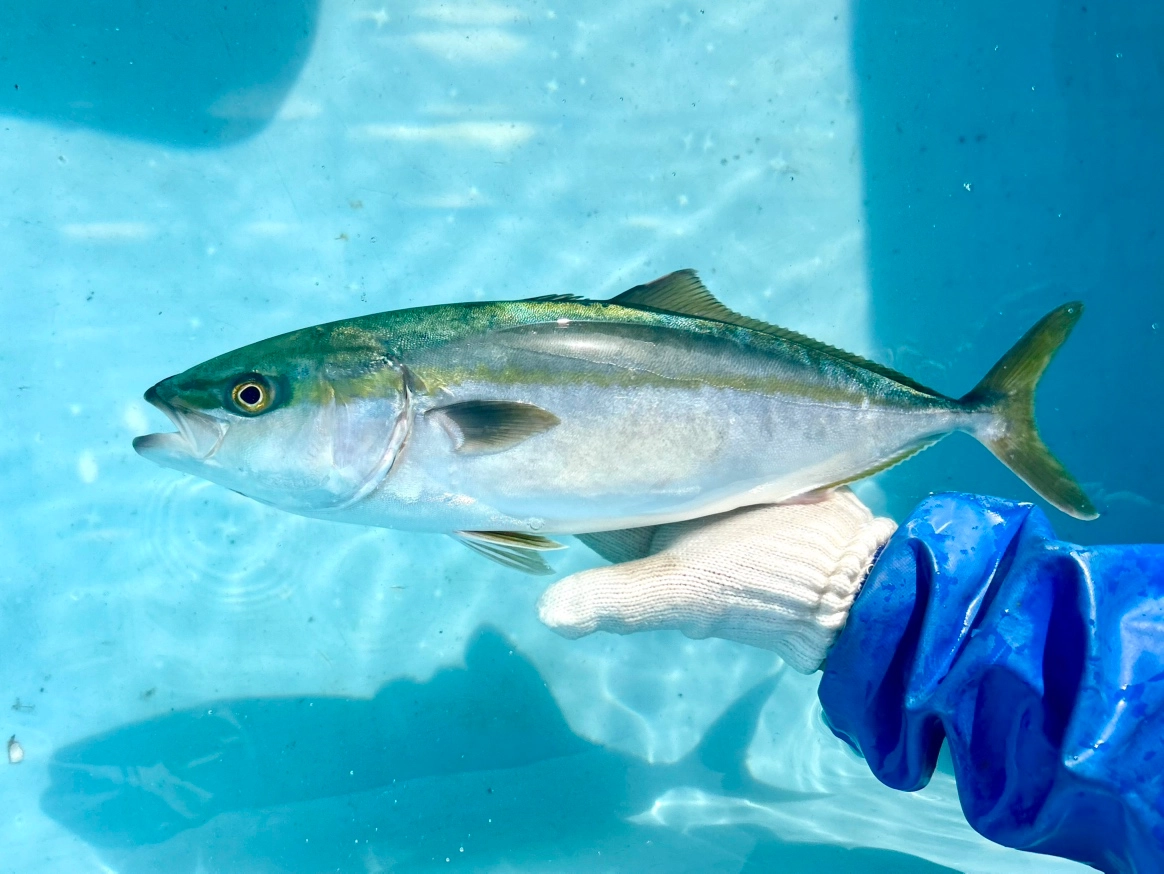
Commercial launch of artificial yellowtail juveniles
In 2022, we established Marineverse Ltd., a joint venture with Takuyo Co., Ltd., a major red sea bream aquaculture company. After approximately three years of joint research and development, Marineverse began selling artificial yellowtail juveniles in June 2025 in collaboration with PtBio Inc., a startup originating from Hiroshima University. The sales partner, Owasebussan Co., Ltd., specializes in the aquaculture of yellowtail and amberjack, and F&LC also holds an equity stake in the company.
In addition to artificial yellowtail juveniles, Marineverse develops and sells feed for red sea bream and yellowtail. Insights from sales partners are incorporated into ongoing improvements to enhance feed flavor and quality.
Partnership with a land-based sea urchin aquaculture company
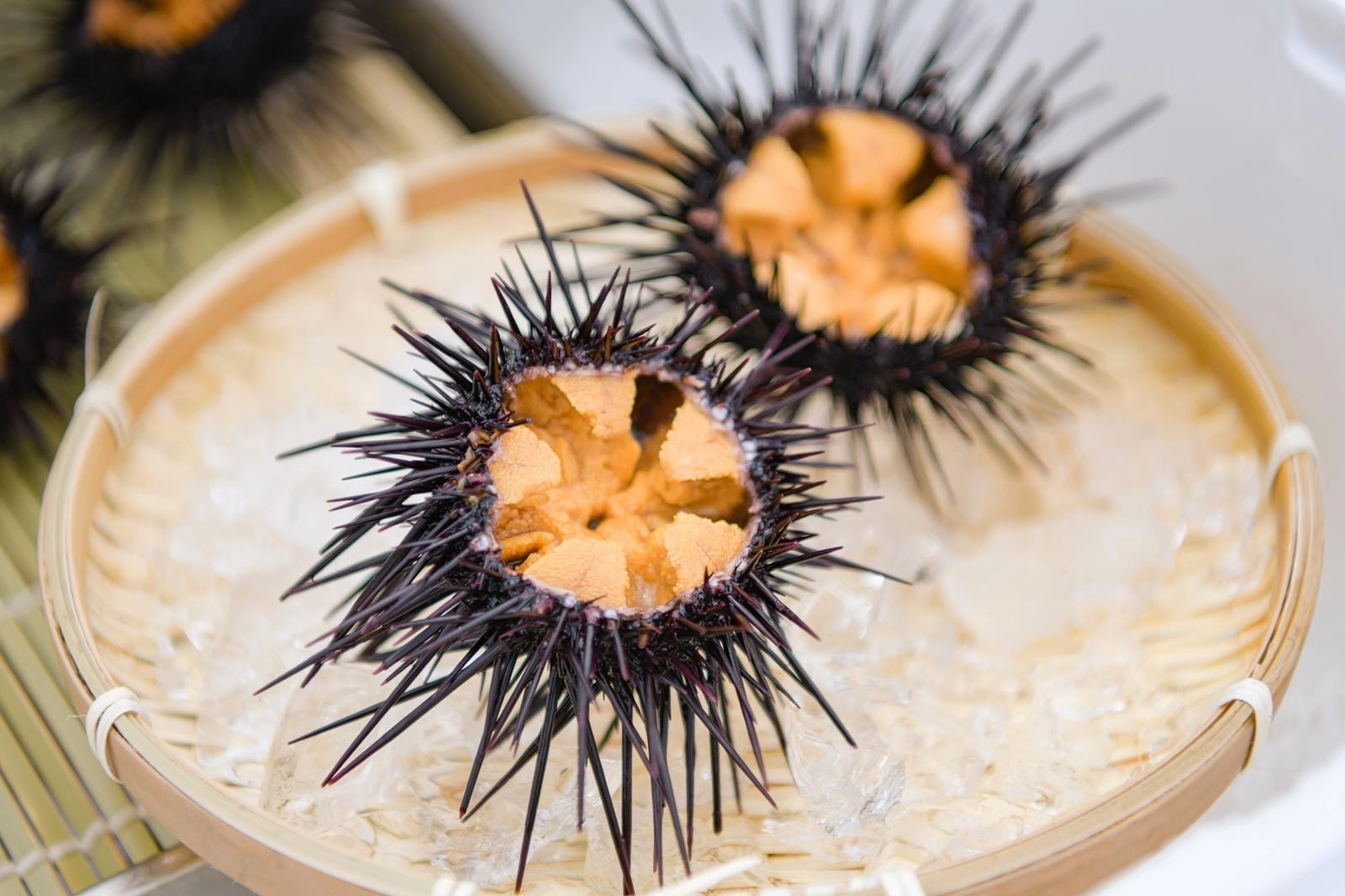
In 2024, we entered into a capital and business alliance with Uninomics Inc. The company regenerates underdeveloped sea urchins—whose overpopulation contributes to barren coastal areas—into high-quality sea urchins using its proprietary land-based aquaculture technology and brings them to market. To secure sufficient production capacity for supply to F&LC, Uninomics is advancing the construction of aquaculture facilities and establishing the necessary systems for the launch at F&LC locations. At the Sushiro Future Expo Store during Expo 2025 Osaka, Kansai, Japan, Uninomics’ sea urchins were offered as one of the seafood products contributing to solutions for social issues, receiving high praise from customers.
Equity participation in fisheries tech companies
Through equity investments in PtBio Inc. and Regional Fish Institute, Ltd., both university-origin startups, we aim to realize sustainable aquaculture by advancing research to improve productivity and develop fish species adaptable to environmental changes.
Joint demonstration test toward sustainable aquaculture
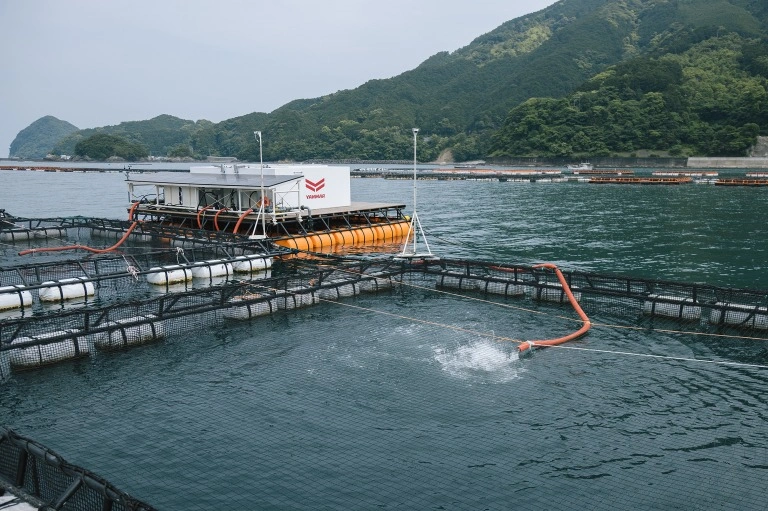
In June 2025, we commenced a full-scale joint demonstration test of a remote automated feeding system for yellowtail aquaculture in collaboration with Yanmar Holdings Co., Ltd. and Owasebussan Co., Ltd. If remote feeding technology is successfully established, it is expected to improve operational efficiency and reduce labor burdens. As aquaculture becomes increasingly important in marine resource procurement, this initiative is expected to help address challenges such as labor shortages, feeding cost burdens, and environmental changes.
Promotion of Food Loss Reduction
Materiality
Minimize food loss and waste and effectively utilize marine resources
Recognizing that reducing food loss is an important social issue, we are further strengthening our efforts. In order to continue to deliver high quality and delicious products at affordable prices, it is important to minimize food waste as much as possible. To this end, we are promoting various measures such as DX and Group-wide utilization of ingredients. We are also exploring the recycling of food waste into animal feed or biomass fuel to promote efficient resource utilization and reduce waste disposal costs.
Food loss reduction with DX and AI
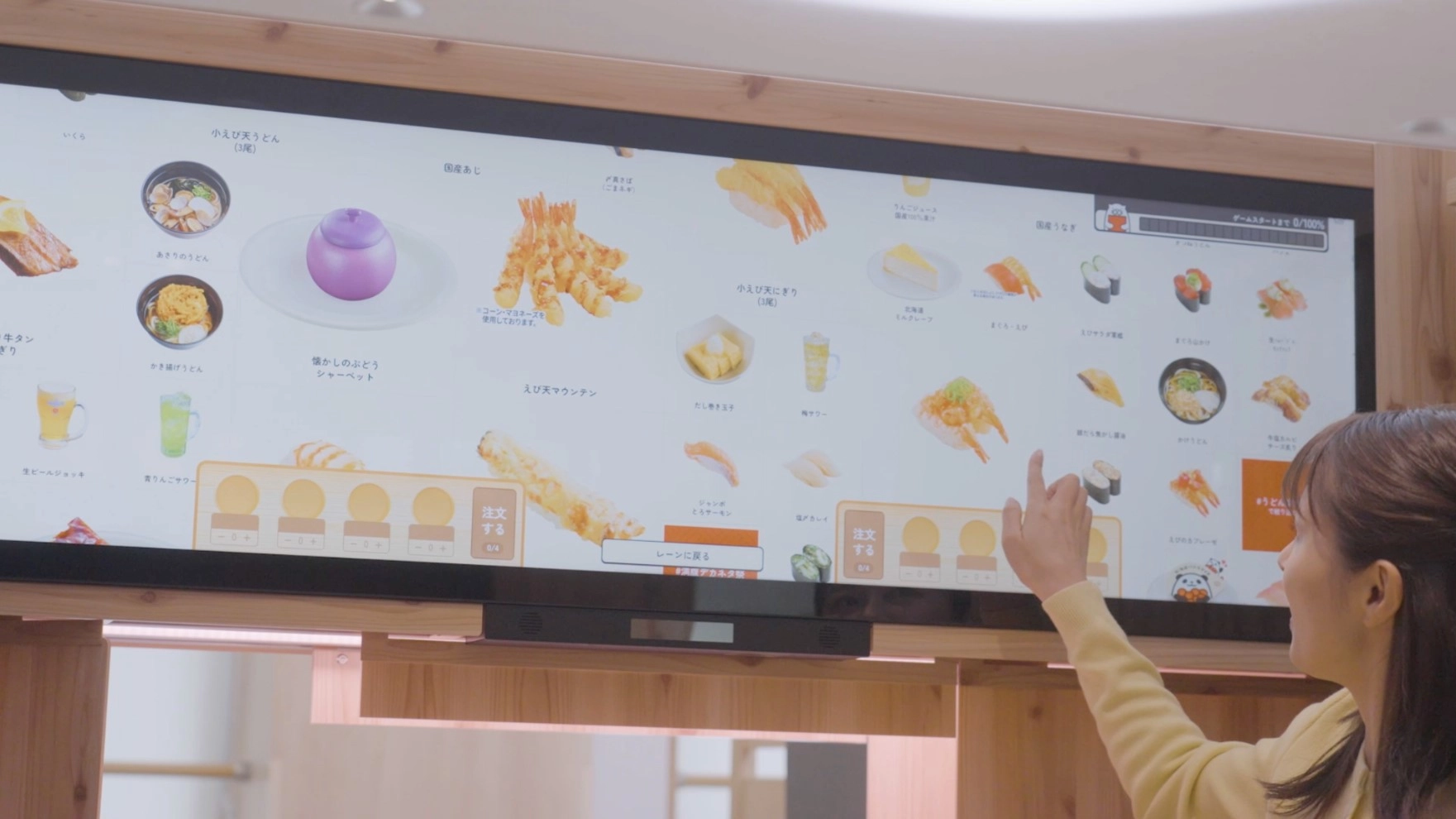
Sushiro in Japan is working to reduce food loss through the use of AI. For example, AI analyzes past sales data to forecast demand, enabling appropriate ordering quantities and ingredient usage.
In addition, to provide freshly cooked rice to customers, we determine optimal cooking volumes based on real-time demand forecasts. The accuracy of these forecasts continues to improve through AI’s machine learning capabilities.
Making full use of valuable fishery resources
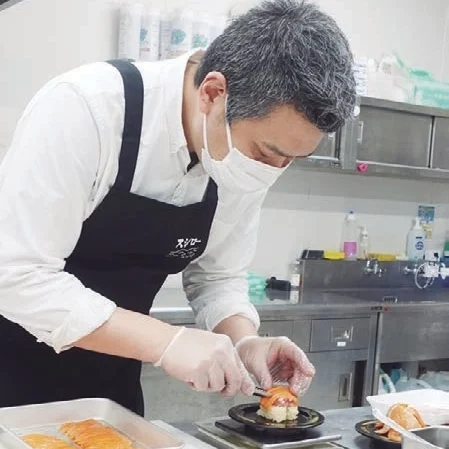
It is generally said that only about 40% of a whole fish can be used for sushi. However, we recognize value even in parts such as heads and bones and have established a cross-brand scheme to maximize the use of ingredients. For example, the parts of the tuna suitable for nigiri are used by Sushiro, and the meat that can only be removed by hand is served at Sugidama. Sushiro also makes use of parts of the fish that cannot be made into nigiri, such as using the ara (trimmings) as broth for the ramen noodles. At the core of the approach is the idea that the ara (trimmings) and bones are equal in value to the deliciousness of “back and belly” parts used for sushi. Since our establishment, we have inherited the concept of Japanese cuisine that “no part of a fish is discarded,” and our menu innovations have led to a reduction in food loss.
Moreover, in 2023, Sushiro discontinued the practice of placing non-ordered items on conveyor belts at all stores. As a result, food loss from discarded conveyor-belt items has been eliminated.
Plastics and Waste Reduction, Reuse and Recycling
Materiality
Minimize food loss and waste and effectively utilize marine resources
Achieving carbon neutrality
We are committed to reducing and preventing environmental pollution as a sustainable approach in our business activities. The Group, which operates globally, promotes the 3Rs of plastics and waste by complying with the environmental laws and regulations of each country and region, as well as internal company rules.
Plastic reduction and recycling initiatives
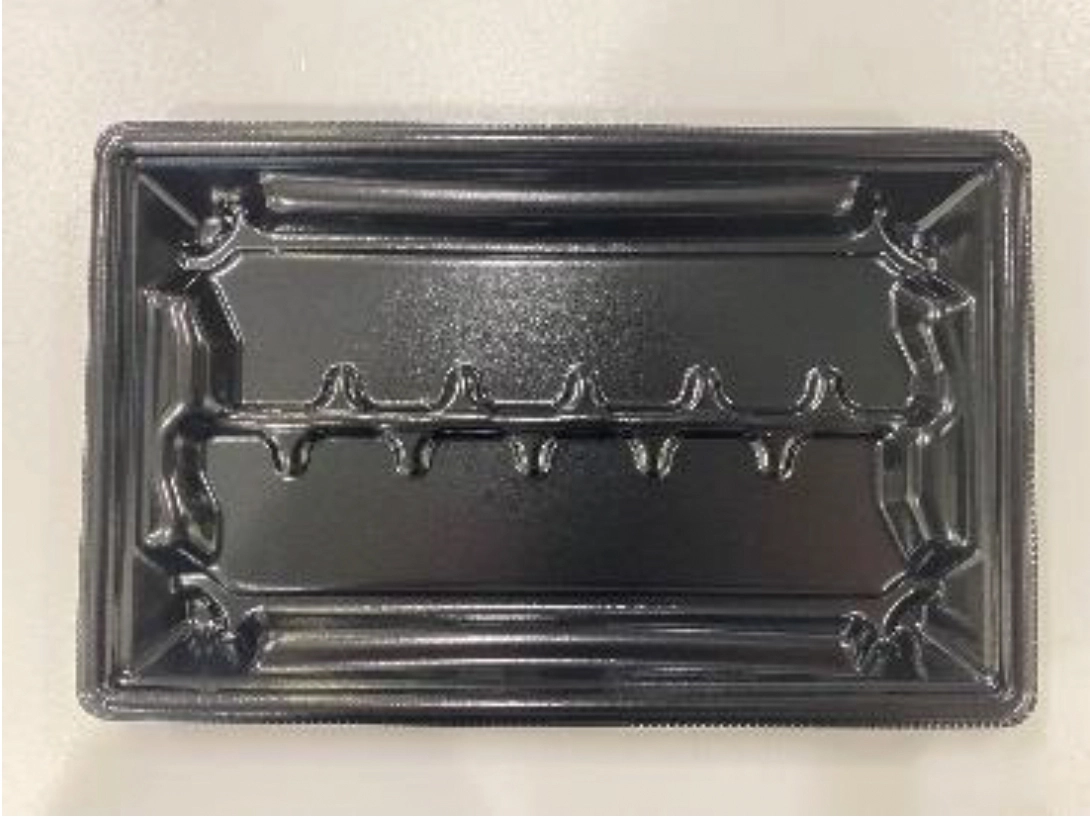
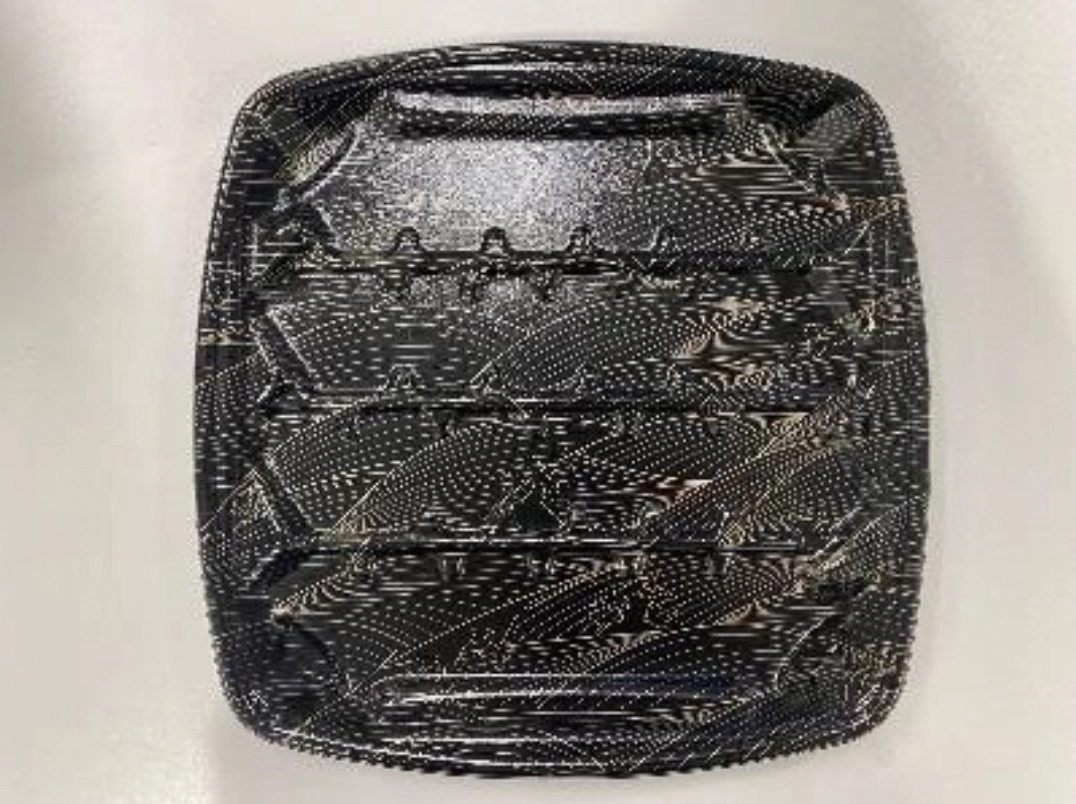
Since FY2022, we have gradually transitioned to more eco-friendly take-out containers that use less plastic and incorporate factory offcuts. In FY2025, this initiative resulted in an annual CO2 reduction of approximately 1,096 tons at Sushiro stores in Japan. We are also exploring further measures to reduce plastic use, including transitioning to paper containers and introducing recycled and renewable materials.
テイクアウト用のエコ容器
Effective use of waste cooking oil
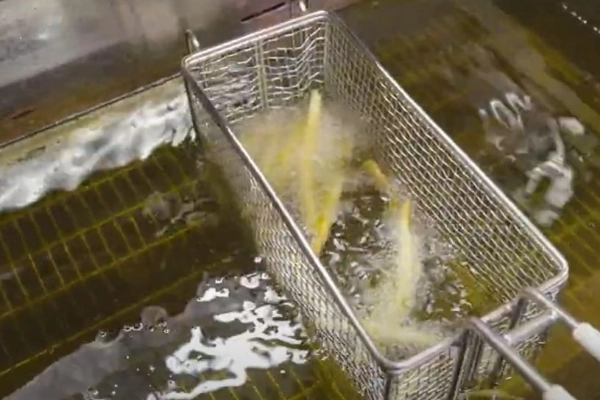
Approximately 1.3 million liters of waste cooking oil generated annually at more than 700 domestic Sushiro and Sugidama stores are supplied as raw material for domestically produced sustainable aviation fuel (SAF).In 2025, Japan’s first large-scale SAF production plant began operation in Sakai City, Osaka Prefecture. The first passenger flight fueled with this SAF departed from Kansai International Airport.Through this effective resource utilization, we aim to contribute to the realization of a circular economy.
Effective Use of Water Resources and Drainage
Materiality
Minimize food loss and waste and effectively utilize marine resources
Recognizing that water is an important resource in the Group’s business, we are working to prevent water and soil contamination through efficient use of water resources and appropriate wastewater treatment in accordance with our Environmental Policy. Since 2014, Sushiro has implemented water-saving measures. In FY2025, water-saving devices known as “Bubble90” were installed on high-usage faucets at all domestic Sushiro stores, reducing and optimizing water consumption. This initiative has also been expanded to other Group brands, with 73 Sugidama stores installing the devices in FY2025. We will continue to advance these initiatives and promote the efficient use of water resources through regular maintenance and monitoring of water usage.
Responding to TCFD Recommendations
Materiality
Achieving carbon neutrality
As the Group uses a wide variety of marine, fishery, and agricultural resources as raw materials, we view climate change as a significant management risk and disclose information related to climate change in accordance with the recommendations of the Task Force on Climate-related Financial Disclosures (TCFD).