 Global
To continue delivering delicious sushi
── An Interview with Senior Corporate Officer Aratani: The Current State of the “Upstream Business”
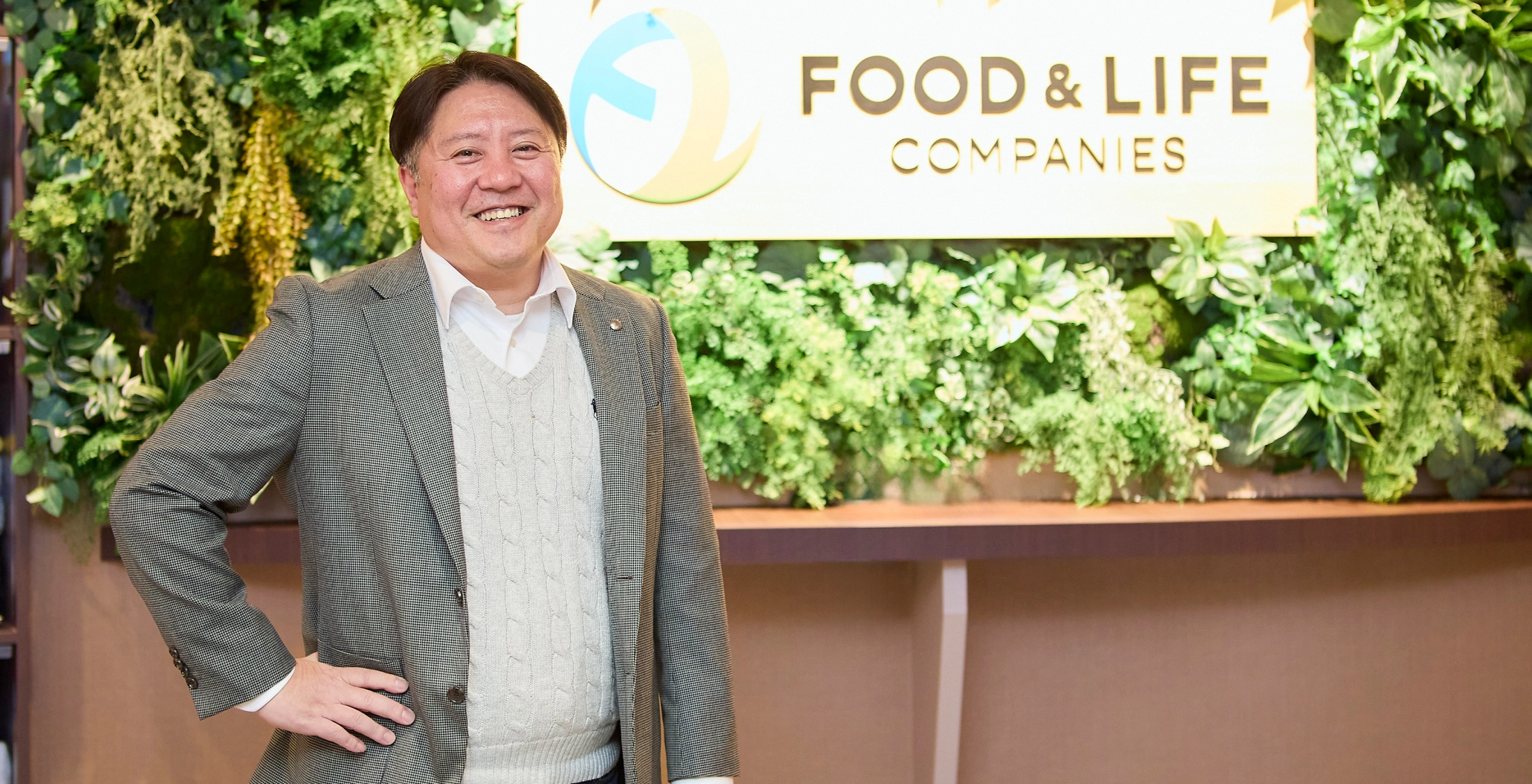
In recent years, F&LC has been accelerating its efforts to ensure a stable supply of ingredients, including entering the aquaculture sector and entering into long-term contracts with producers. We spoke with Senior Corporate Officer Aratani, who oversees this area—known as the “upstream business”—to learn about the background and his vision for these initiatives.
Profile
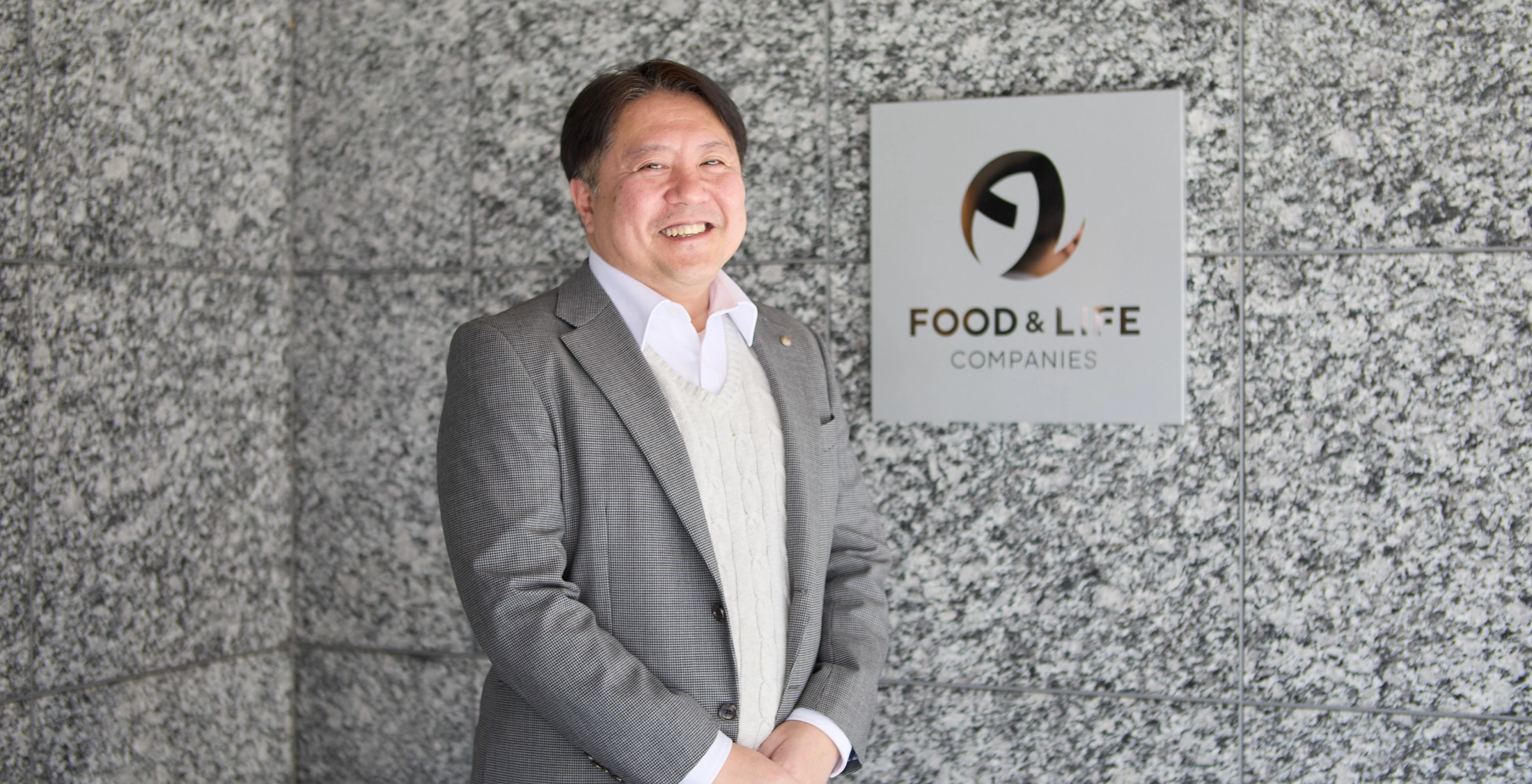
: Senior Corporate Officer Kazuo Aratani.
With a background in sales, he has served as president of Sushiro’s Hong Kong office and as an executive in charge of the Greater China region. Drawing on his firsthand experience of the front lines and the challenges of expanding overseas operations, he currently oversees the Upstream Business.
*Affiliations and titles are as of the time of the interview.
If you just buy it, it won’t be delivered
―― Could you tell us what led you to start focusing seriously on the Upstream Business?
For some time now, we have been aware that relying solely on our traditional procurement methods would make it impossible to secure the necessary quantities in the future.
Fishery resources are limited. Compared to 10 years ago, the amount of fish caught in fishing grounds has clearly decreased. Rising water temperatures are also leading to situations where fish can no longer be caught in areas that once yielded abundant catches. Amid these changes, it has become difficult to continue simply purchasing fish from the market and delivering them to our customers at a stable quality and affordable prices.
In order to continue offering a standardized menu nationwide, we must ensure a steady supply of ingredients in large quantities. Given our goal of delivering delicious sushi to people all over the world, we cannot turn a blind eye to the challenges of sourcing. That is why we chose to get involved right from the source.
Delivering this delicious taste and quality at an affordable price
―― Specifically, what kinds of initiatives are you undertaking?
Sushiro is committed to its mission: “Delicious sushi until you’re full. Delicious sushi that fills your heart.” We believe it is essential that our customers can enjoy delicious sushi at an affordable price whenever they visit our restaurants. To ensure this consistency, we are working with our partner producers to develop sustainable aquaculture practices.
Regarding yellowtail and amberjack, we have established a joint venture called Marine Birth with Takuyo, a leading sea bream aquaculture company, and are moving forward with efforts to produce these species from artificially produced fry (*). Following the research phase, shipments have already begun in some regions, and the high quality of the fish has been confirmed.
(*Artificially produced fry: juvenile fish born artificially from aquaculture parent fish)
Incidentally, companies from a wide range of industries are entering the upstream business sector. This indicates that many companies recognize the need to address this area.
What I Saw When I Ventured Upstream
―― What has changed since you moved upstream?
The biggest change is that I now have more opportunities to speak directly with the producers. Before, my job was simply to check the quality of the finished fish, so I didn’t have a view of what happened beyond that point. But by moving further upstream in the supply chain, I’ve taken on a role where we work together to figure out how to raise the fish to achieve the best quality. I’ve come to understand firsthand what’s happening at the cutting edge of the industry and what challenges they’re facing.
When we experience the dedication and expertise of the people who deliver our ingredients, our own role becomes much clearer. We take the producers’ skills and passion and pass them on to our customers through our stores. It’s like a relay race. I now feel much more strongly than ever before that we are the ones responsible for passing that baton.
A world that has only just begun
―― Please tell us about your future plans.
Since we’ve only been at this for a few years, our initiatives related to upstream operations are still in the early stages of development.
What I find interesting is that fish farming is a relatively new field compared to livestock and agriculture, with a history of only about 100 years. While the production of cattle, pigs, and rice has been refined over thousands of years, fish farming is still in its early stages of development. In other words, there is still so much potential for growth. Continuous improvements will help us offer products at prices our customers can afford, and there is still plenty of room to enhance both quality and consistency.
On the other hand, there are challenges, such as the limited availability of suitable sites for aquaculture. We must move forward by addressing these challenges one by one.
Whether it’s 10 years from now or 50 years from now
―― Finally, could you tell us what you aim to achieve through the Upstream Business?
What if you couldn’t eat sushi anymore? That would be awful, wouldn’t it?
I’m not saying this as a joke. The term “sustainability” is often thrown around, but for us, it’s really quite simple: we want to keep serving our customers delicious sushi—whether it’s 10 years from now or 50 years from now. That’s all there is to it. We believe that environmental protection and resource conservation naturally follow from that, which is why we’re taking one step at a time with what we can do right now.
There are still many parts of the world where people have never tasted sushi, so I really want to bring it to them. I aim to be a sushi restaurant that people describe as tastier and of higher quality than any other, yet still affordable—and to achieve that, I’m committed to doing everything necessary, from sourcing the ingredients to serving the final dish.