Global
Please note that this page is automatically translated.
From the Importance of Food to Smiles and Gratitude―― What F&LC Wants to Convey Through “SUSHI-IKU”
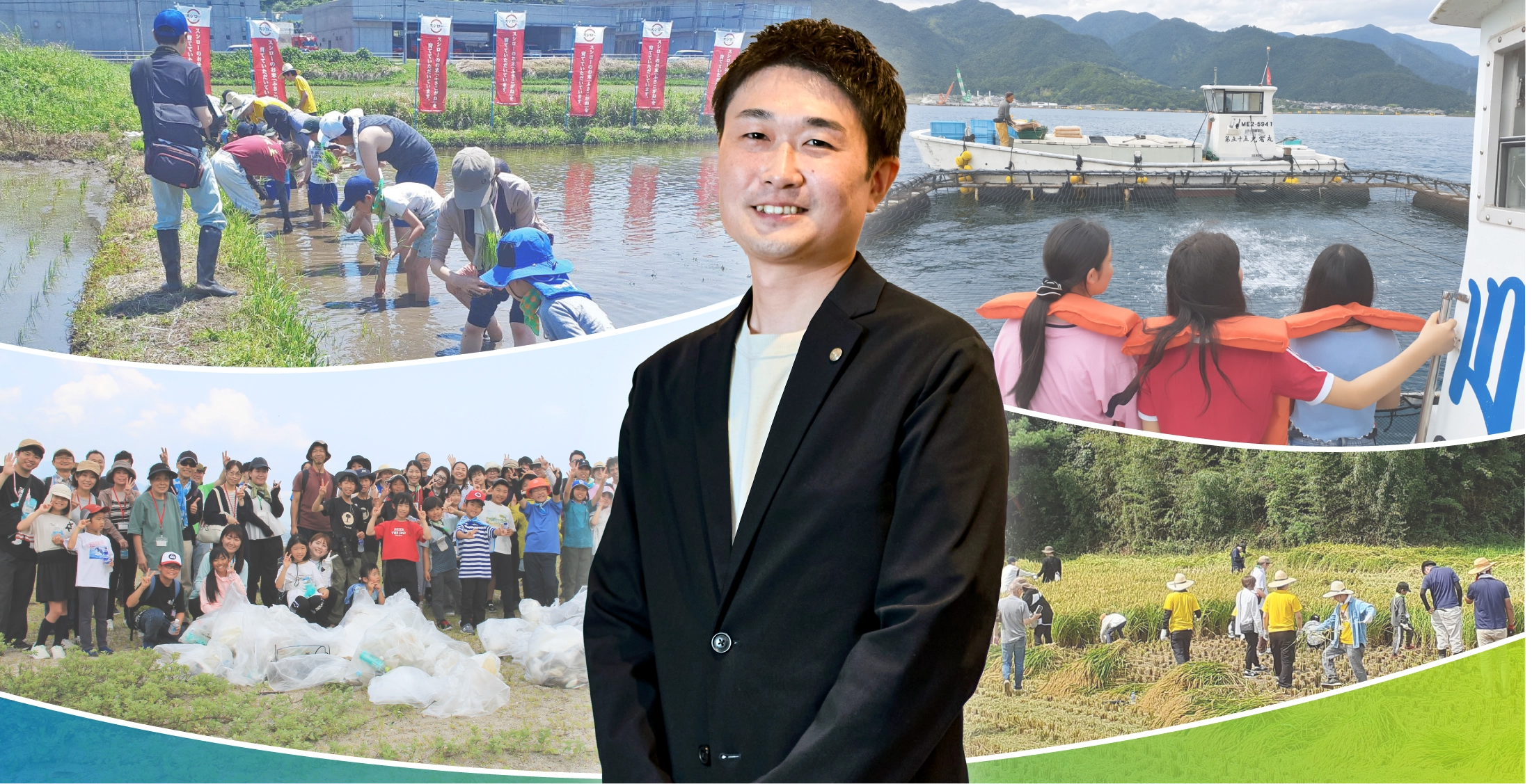
F&LC began inviting children to participate in rice-planting and rice-harvesting experiences in 2015. Initially, this was part of a public relations effort—specifically, an initiative within the “Sea and Rice Fields Project,” which focused on the rice and fish that form the foundation of delicious sushi. Over the course of more than 10 years, the program has evolved into an initiative that teaches children the importance of food and fosters a sense of gratitude for nature’s bounty and the producers who make it possible. Today, in addition to hands-on experiences in the rice paddies, the program also includes tours of fish farms and outreach classes at schools.
This year, F&LC named these activities “SUSHI-IKU” and, guided by the philosophy of “passing on the joy and smiles brought by sushi to future generations,” has begun focusing its efforts on promoting these initiatives. We spoke with Suenaga from the Sustainability Promotion Section of the Corporate Planning Department to learn what “SUSHI-IKU” aims to convey and what kinds of reactions he has observed among the children.
Profile:
Shoma Suenaga
Sustainability Promotion Section, Corporate Planning Department. After serving as an assistant store manager at a Sushiro location, he transferred to his current position through the company’s internal recruitment program. He is currently the lead coordinator for “SUSHI-IKU” and is responsible for managing all related activities.
*Affiliations and titles are as of the time of the interview.
―― What kinds of activities does “SUSHI-IKU” carry out?
Broadly speaking, there are three main locations: rice paddies, the ocean, and classrooms. At the rice paddies—located in various regions such as Shiga, Hyogo, and Chiba—we participate in rice planting and harvesting. At the ocean, primarily in Owase City, Mie Prefecture, we conduct activities such as tours of aquaculture farms. The classroom sessions consist of outreach lessons for students ranging from elementary school through high school. Sushi is made up of rice (shari) and fish or other ingredients (neta). Through hands-on activities and lessons, we help children learn about the rice and fish used in sushi. “SUSHI-IKU” is an initiative designed to spark their curiosity and provide them with opportunities to learn.
Realizing the Importance of Food Through Experience
―― What do you prioritize on the front lines to create opportunities for people to learn about the importance of food?
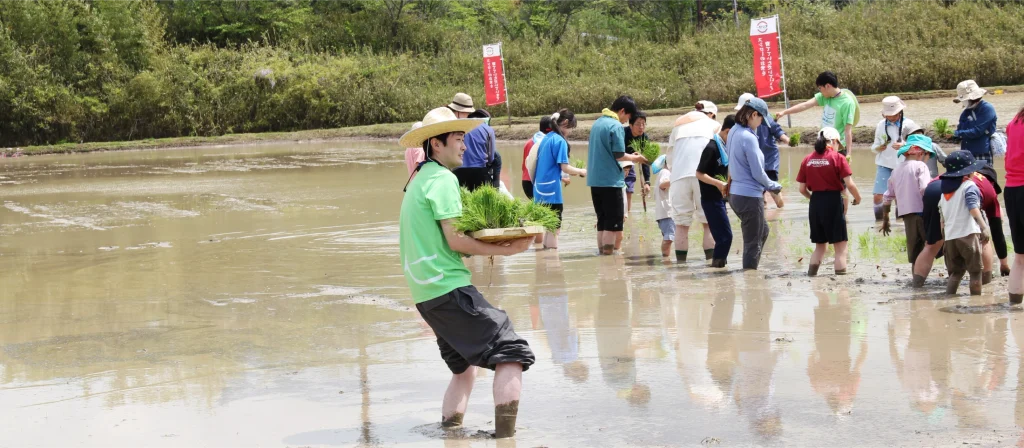
Our goal is for everyone to have fun participating. Rather than creating a formal learning environment, we approach it with the hope that “they’ll develop even a little interest.” The children enjoy planting rice while getting covered in mud in the paddies. Some even get so absorbed in searching for snails that they lose track of the task at hand, but I think that’s just part of the unique joy of being in a rice paddy. Last year, during our first sea urchin shell-peeling activity in Nagato City, Yamaguchi Prefecture, some children initially said, “I don’t want to do this,” but once they got started, everyone became completely engrossed. Interest isn’t sparked by mere study—it comes from having fun—and I believe that’s what really matters.
―― What kind of feedback do you receive from participants after the experience?
We’ve heard from parents that “their children have started eating all their rice.” After this year’s rice-planting event, we also received feedback such as, “I’ve been able to share the importance of rice with my son at home.” A major goal of the event is for participants to take home a sense of appreciation for food. It truly makes us happy to learn that this sentiment lingers even after they return home and that parents and children are sharing it together.
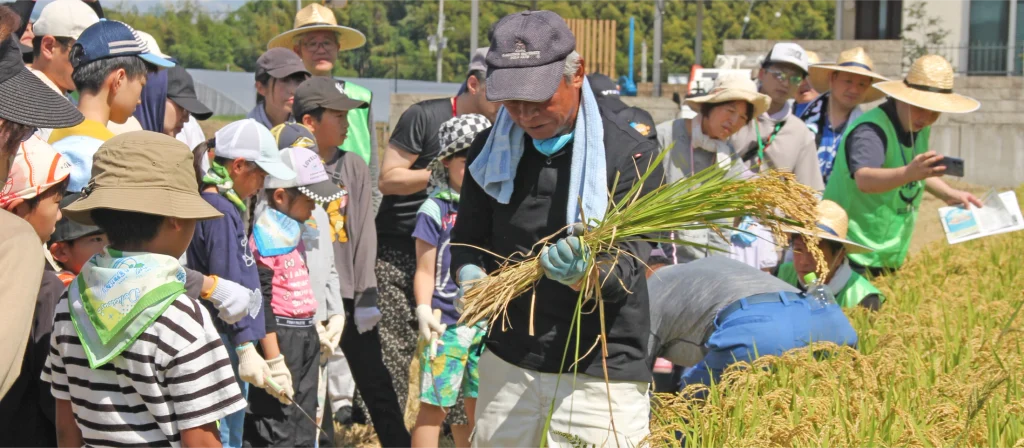
Discover the origins of the sushi you eat every day
―― Just hearing about the rice alone really brings home how the children have changed. Could you tell us more about their ocean experiences related to fish?
During the marine experience, participants get to see where the ingredients for the sushi they eat every day actually come from. In previous years, we’ve taken a boat out to a hamachi fish farm offshore, where the children feed the fish growing in the pens. I don’t think there are many opportunities to see live, swimming fish up close like that. At the port, they get to touch the freshly caught fish and observe the fish processing and the steps involved in delivering the catch to stores the very same day. We want them to truly appreciate how fish that were once swimming in the ocean are turned into fillets and served to everyone as sushi.
―― So, through hands-on experiences in rice paddies and the ocean, you’re helping people connect with the origins of the sushi they eat at restaurants, aren’t you?
Yes. I’ve heard stories of people heading straight to Sushiro on the day of the experience or the very next day, and some have even written in their feedback that “my perspective on the sushi I usually eat without giving it a second thought has changed.” What they learn during the experience connects directly to a dish served at the restaurant. Hearing such feedback is what keeps me motivated in this job.
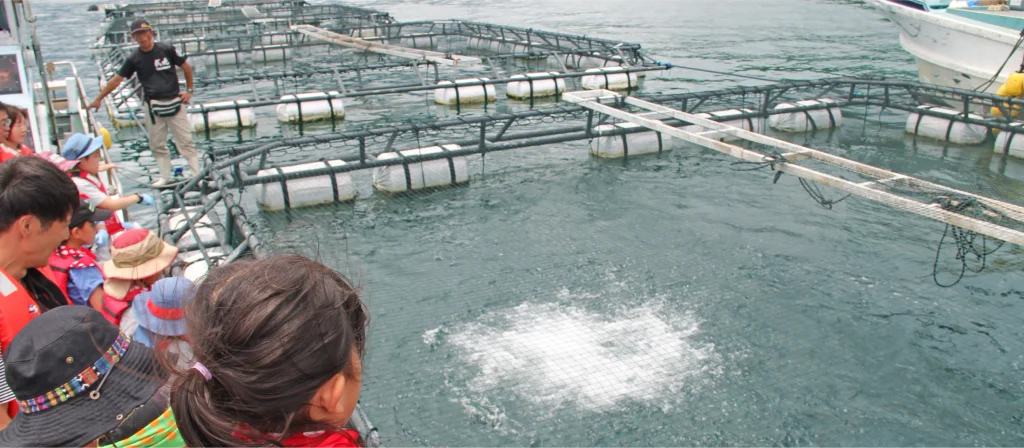
Focusing on the environments where rice and fish are grown, and on the producers themselves
―― What else would you like to convey through this experience?
For example, fish grow because they have people who care for them every day and a comfortable ocean environment. The staff at the fish farm feed the fish daily and raise them with great care. Even so, depending on ocean conditions, there are years when things don’t go as usual. This year, due to a temporary red tide, we were unable to hold the fish-feeding experience in the pens, so we conducted a different program instead. As you can see, ocean conditions are constantly changing.
There are people who raise fish while living in harmony with nature. The lives of the fish we eat are sustained by the efforts of these people. A parent who participated last year told us, “I think watching a whole fish being filleted helped the children realize that we are alive because we receive the gift of a fish’s life. ”We believe that learning about the hard work and ingenuity of the producers behind each fish is also an important part of learning through hands-on experience.
―― On the other hand, the outreach classes take place inside the classroom. What kind of content do these classes cover for students who don’t visit the ocean or rice paddies?
We tailor our lessons to the students’ grade level and the current theme. Last year, at a junior high school in Osaka Prefecture, we conducted a two-period lesson on the theme, “Learn about the current state of fishery resources and design the conveyor-belt sushi of the future.” In the first period, students learn about the current environmental and social issues surrounding fishery resources and how conveyor-belt sushi restaurants are addressing them. In the second period, students broaden their perspective and, through group work, consider—from a personal standpoint—what they, society, and businesses can do, and then present their ideas.
However, if you try to cram too much into a limited amount of time, students won’t be able to absorb it all—and it won’t be very interesting, either. That’s why I prioritize sparking even a little interest rather than over-explaining. On that basis, they think for themselves and put their thoughts into words. I’ve heard that the students at that middle school said, “We want to work toward putting even a little of what we’ve thought about into practice.”
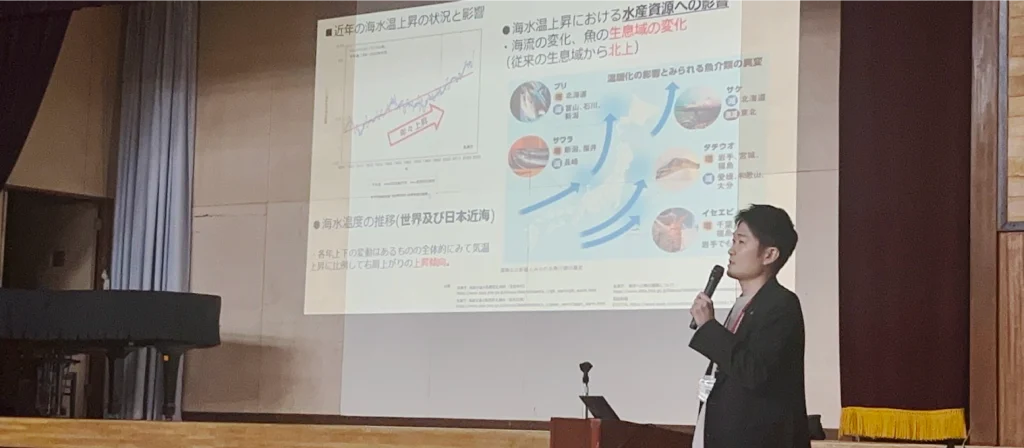
The experience I gained working in store is reflected in everything I do.
―― You plan and manage a wide range of activities for “SUSHI-IKU.” How did you come to be involved in this work?
When I joined the company, the recruiter told me, “Headquarters is the support team for our stores.” I felt that supporting from behind might suit me better than working on the front lines. That’s why I’d been hoping to work at headquarters for some time, and when the open recruitment program was announced, I applied. When I was transferred, I was told I would “also” be in charge of food education activities, but now, as the primary coordinator, I’m entrusted with managing all of them. At the stores, there’s a wide range of tasks, from filleting fish to serving customers. The interpersonal skills I’ve developed while working alongside people of all ages—from high school students to those in their 80s—are proving to be incredibly valuable in managing these events.
―― After working at headquarters, has your perspective on your colleagues at the stores changed?
At these events, the kids often come up to me and say things like, “We went to Sushiro the other day!” or tell me their favorite sushi toppings. If I were to stand up and speak as just an individual during a school visit, I honestly don’t think anyone would listen. But because the kids feel a connection to “Sushiro” and think, “Someone from Sushiro (F&LC) is here,” they’re eager to listen. I feel that’s all thanks to the hard work everyone at our stores puts in every day.
Here’s to delicious sushi for years to come
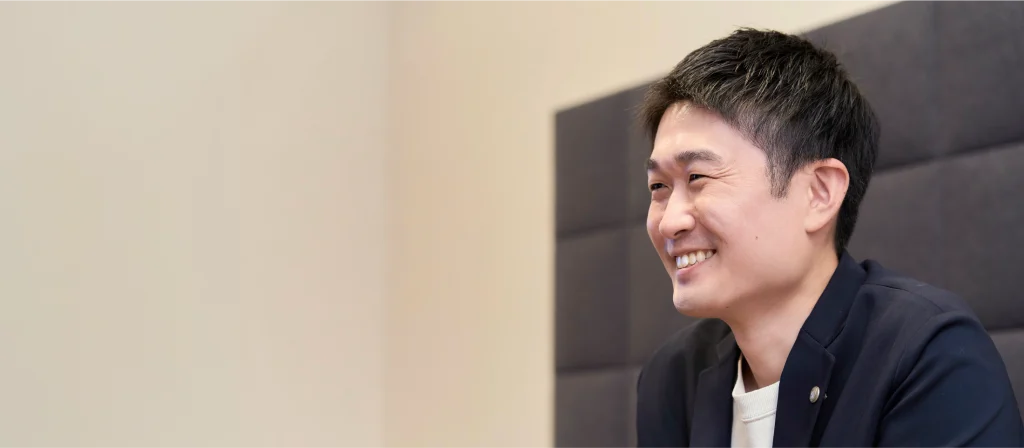
―― Please tell us what you find rewarding about the “SUSHI-IKU” initiative.
At the end of the hands-on event, we see the participants off at the nearest station. We high-five the children and exchange a few words with them. Since the event runs all day—from check-in at 9:00 a.m. until around 4:00 p.m.—some of the children look a little tired. Still, when I see their eyes sparkling with joy during the event, or hear comments afterward like, “I want to eat rice with gratitude” or “I’ve come to understand the importance of the ocean and the lives of fish,” I realize that the message we want to convey is truly getting through, and I feel glad that we’re doing this.
―― Finally, please tell us what you hope to convey through this initiative.
I believe that “SUSHI-IKU” begins with helping people understand the importance of food. Building on that, I hope to spark their interest in the foods they eat every day. To ensure we can continue enjoying delicious sushi in the future, it is essential that we preserve the environments where rice and fish are cultivated for generations to come. Ultimately, I hope this will encourage people to turn their attention to the producers as well.”
Going forward, in addition to our activities themselves, we hope to share these opportunities with even more people.